martedì 4 marzo 2014
RISOTTO WITH ASPARAGUS - RISOTTO AGLI ASPARAGI
Ingredients for 4 people:
320g Arborio rice
800 grams of fresh asparagus
required for 1 liter of vegetable broth (I used , celeriac, tomatoes, parsley , yellow onion , celery , carrot )
butter , parmesan cheese to thicken
oil , sauté the shallot for
preparation:
First , cleanse the asparagus by cutting the lower white part and leaving the green and wash them thoroughly.
Put them in a saucepan and cover with tall, narrow water almost up to the tips. Cover , turn on the stove and cook for about 10 minutes. Drain them when they are almost cooked. Keep the cooking water . Remove the tips now and keep some to decorate the plate. Make it with the remainder of the small pieces and keep aside . Now put the vegetable broth to a boil .
Now take half of the asparagus, cut into pieces and a couple of ladles of broth and mix with a mixer.
Meanwhile make the sauce in a steel pot with olive oil and chopped shallots . Put the rice to toast . When it has browned , pour a glass of white wine and let the alcohol evaporate completely . Add the broth and cook slowly for about 15 minutes. Then add the cream of asparagus, and the pieces and cook until cooked optimal . Turn off the heat and stir in butter and parmesan cheese. Cover and let stand for a few minutes . Serve hot accompanied it all with a good Chianti Gallo Nero
Ingredienti per 4 persone:
320 grammi di riso Arborio
800 grammi di asparagi freschi
necessario per 1 litro di brodo vegetale (io ho usato, sedano rapa, pomodoro, prezzemolo, cipolla bionda, sedano bianco, carota)
burro, parmigiano per mantecare
olio, scalogno per il soffritto
Preparazione:
Per prima cosa, mondate gli asparagi tagliando la parte bianca inferiore e lasciando la parte verde e lavateli abbondantemente. Metteteli in un pentolino alto e stretto e coprite di acqua fino quasi alle punte. Coprite, accendete il fornello e fate cuocere per circa 10 minuti circa. Scolateli quando saranno quasi cotti. Tenete l'acqua di cottura. Togliete adesso le punte e tenete qualcuna per decorare il piatto. Con il rimanente fatene dei pezzi piccoli e teneteli da parte. Mettete adesso a bollire il brodo vegetale. Prendete ora metà degli asparagi tagliati a pezzi e un paio di mestoli di brodo e frullateli con un mixer.
Nel frattempo fate il soffritto in una pentola in acciaio con olio e scalogno tritato. Mettete il riso a tostare. Quando avrà preso colore, sfumate con un bicchiere di vino bianco e fate evaporare completamente l'alcool. Aggiungete il brodo piano piano e cuocete per circa 15 minuti. Unite quindi la crema di asparagi, e i pezzi e cuocete fino a cottura ottimale. Spegnete il fuoco e mantecate con burro e parmigiano. Coprite e lasciate riposare per qualche minuto. Servite caldo accompagnando il tutto con un buon Chianti Gallo Nero
CAPON OF MOROZZO - Cappone di Morozzo
The Morozzo capon (Cuneo ) is a castrated rooster that is "produced " by the race ovicola " blonde Piedmont ." Their main feature is that it is not without crest and wattles . Its preparation is done in some countries still " handcrafted " by the skilled hands of women according to ancient custom in the farmyards of peasant farms . The operation generally takes place around August so that the capon is ready for the Christmas holidays .
Its meat is generally very soft and delicate and the kitchen has various applications such as broths or read though , the most commonly used , is baked with potatoes and onions.
Every year in December , in the village of Cuneo famous fair is organized on the participation of practically always great exponents of international gastronomy , political and agricultural operators in the industry.
The origin of the event seems to have originated in Italy during the Napoleonic occupation . The story goes that the local farmers ( sharecroppers ) bring to the owners of the land , as a gift for the Christmas holidays , 2 capons . Since then, this event is held every year now resonant national and European level.
Il cappone di Morozzo (Cuneo) è un gallo castrato che viene "prodotto" dalla razza ovicola "bionda piemontese". La loro prerogativa principale è quella di essere senza cresta e senza bargigli. La sua preparazione viene fatta, in alcuni paesi ancora "artigianalmente" dalle sapienti mani delle donne secondo usanza antiche contadine nelle aie delle cascine. L'operazione avviene generalmente verso agosto in maniera tale che il cappone sia pronto per le feste Natalizie.
La sua carne è generalmente molto tenere e delicata e in cucina trova diverse applicazioni quali brodi o lessi anche se, quella più usata, è al forno con patate e cipolle.
Ogni anno a dicembre, nel paese del cuneese viene organizzata la celebre fiera relativa alla quale partecipano praticamente sempre grandi esponenti della gastronomia internazionale, politici e operatori agricoli del settore.
L'origine della manifestazione sembra aver avuto origine durante l'occupazione Napoleonica in Italia. La storia narra che i contadini locali (mezzadri) portassero ai proprietari dei terreni, in dono per le feste Natalizie, 2 capponi. Da allora, ogni anno si svolge questa manifestazione ormai di risonanza nazionale ed europea.
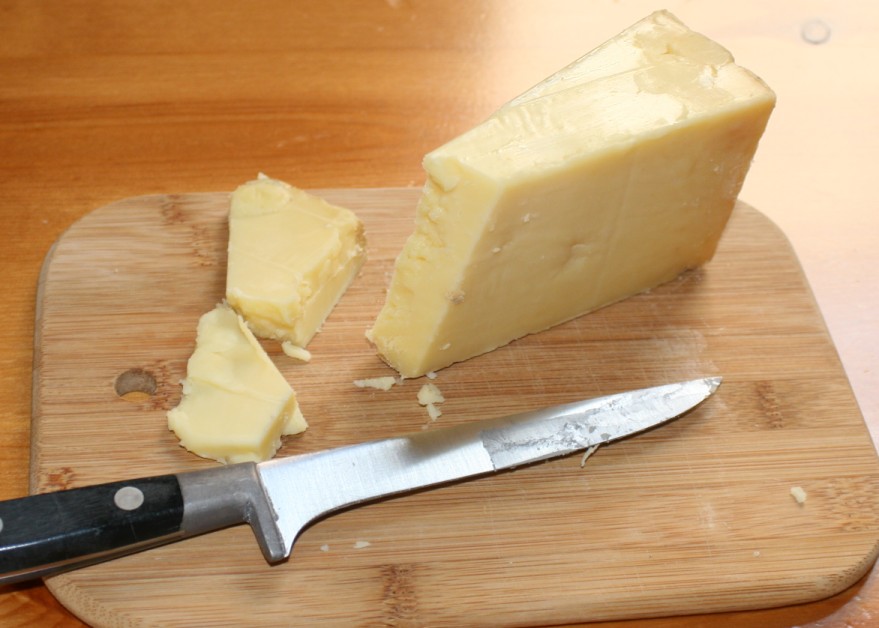
CHEDDAR OF SOMERSET - CHEDDAR DEL SOMERSET
The Somerset Cheddar cheese is one of the great classics of the United Kingdom. Known and exported throughout the world, especially in the U.S. where it is added to some hamburgers, real cheddar cheese "original" is precisely that which arises in the English province. Its color pasta and much more yellow than straw, and its flavor is rich and buttery. Are produced each year nearly 2 million tons of this precious cheese. The flavor is very intense and has hints of hazelnut and caramel.
It contains B vitamins, sodium and phosphorus. It is a cheese that has a very old tradition in that it seems to be produced even by 1170, then in the Middle Ages. If you are in holidays in the UK and England in particular, you might want to do a tasting, perhaps accompanying it to a good local beer.
Visualizzazione ingrandita della mappa
Il cheddar del Somerset è uno tra i grandi formaggi classici del Regno Unito. Conosciuto ed esportato in tutto il mondo, soprattutto negli Stati Uniti dove viene aggiunto ad alcuni hamburgers, il vero formaggio cheddar "originale" è appunto quello che nasce nella provincia inglese. La sua pasta e di colore molto giallo più che paglierino, e il suo sapore è ricco e burroso. Ogni anno vengono prodotte quasi 2 milioni di tonnellate di questo prezioso formaggio. Il sapore è molto intenso e ha sentori di nocciola e caramello.
Contiene vitamina B, sodio e fosforo. E un formaggio che ha una tradizione molto antica in quanto sembra che venga prodotto addirittura dal 1170, in pieno medioevo quindi. Se vi trovate in vacanze nel Regno Unito ed in Inghilterra in special modo, vi conviene fare una degustazione, magari accompagnandola ad una buona birra locale.
lunedì 3 marzo 2014
RICH SALADE WITH CALABRESE SOPRESSATA - INSALATA RICCA CON SOPRESSATA CALABRA
A salad is not exactly " diet" but very tasty . The sopressata Calabrian salami is rich and full of goodness and goes well with the spicy flavor of the arugula and the full flavor of the Parmesan cheese.
Ingredients for 4 people:
300 grams of mixed salad (carrots, sugar loaf , corn, arugula, lettuce , tomato salad , celery )
100 grams of Parmesan cheese
100 grams of sopressata calabrese
1 red onion
1 fresh hot peppers from Calabria
lemon ( not vinegar !) biological untreated
oil, salt
preparation:
Wash and clean all vegetables . then cut into julienne strips all except tomatoes ( pieces not very big ) and celery slices. Then make a citronette emulsifying in a jar bormioli 6 tablespoons olive oil 2 tablespoons lemon juice obviously biological . Close the lid and then shake vigorously until it is well mixed . Pour into salad and add the red onion , cut into thin slices , and red pepper cut into small pieces and mix well . Add the parmesan cheese and sopressata , cut into strips. Season with salt , and serve after about 5 minutes.
Ingredienti per 4 persone:
300 grammi di insalata mista (carote, pan di zucchero, mais, rucola, lattuga, insalata di pomodori, sedano)
100 grammi di parmigiano
100 grammi di soppressata calabrese
1 cipolla rossa
1 peperoncino fresco di Calabria
limone (non aceto!) biologico non trattato
olio, sale
preparazione:
Lavare e pulire tutte le verdure. poi tagliate a julienne tutte le verdure tranne i pomodori (pezzi non molto grande) e il sedano a rondelle. Fate una citronette in un barattolo Bormioli con 6 cucchiai di olio d'oliva 2 cucchiai di succo di limone ovviamente biologico. Chiudete il coperchio e poi agitate vigorosamente fino a quando sarà ben amalgamato. Versate nell' insalata e aggiungete la cipolla rossa, tagliata a fette sottili, e il peperoncino tagliato a pezzettini e mescolate bene. Aggiungere il parmigiano e la sopressata, tagliata a strisce. Aggiustare di sale e servire dopo circa 5 minuti
THE "GLORE" OF PRAGELATO - LA GLORE DI PRAGELATO
The glore Pragelato (Torino) is the dish of the ski resort of Piedmont. Made with delicious local potato dish is a mountain so full of energy you need to work hard in the mountains. I tried to make it a little lighter even though the result may not be the same!
4 potatoes Pragelato
1 tablespoon honey
500 grams of cabbage
30 grams of butter
40 grams of fat
stale bread
oil, salt, pepper
preparation:
Put in hot water to blanch the cabbage and potatoes. Cut into slices and put them in a pan for a few minutes with the quantity indicated.
Then take a baking dish, and arrange imburratela over the bread softened slightly with a bit of whole milk. Lie down then the cabbage, potatoes and bacon. Bake at 180 degrees for 20 minutes. Once cooked, you can add if you want a spoonful of honey will make it much more delicate and fragrant.
La glore di Pragelato (Torino) è il piatto tipico della località sciistica piemontese. Fatto con le deliziose patate locali è una pietanza montanara quindi ricca di energie necessarie al lavoro duro in montagna. Ho cercato di renderla un pò più leggera anche se il risultato forse non è lo stesso!
Ingredienti per 4 persone:
4 patate di Pragelato
1 cucchiaio di miele
500 grammi di cavolo verza
30 grammi di burro
40 grammi di lardo
pane raffermo
olio, sale, pepe
Preparazione:
Mettete a sbollentare in acqua calda la verza e le patate. Tagliatele a fette e mettetele in padella per qualche minuto con il quantitativo di burro indicato.
Prendete poi una teglia, imburratela e disponetevi sopra il pane ammorbidito leggermente con un poco di latte intero. Adagiatevi quindi le verze, le patate e il lardo. Cuocete a 180 gradi per 20 minuti. A cottura ultimata potete aggiungere se volete una cucchiaiata di miele che la renderà decisamente più delicata e profumata.
domenica 2 marzo 2014
TORTELLINI WITH BOLOGNESE RAGOUT - TORTELLINI ALLA BOLOGNESE
Ingredients
For the ragu'
300 grams of beef
150 grams pork belly
1 carrot
1 leg of celery
50 gram yellow onion
300 grams of tomatoes for sauce
1 glass of dry white wine
2 teaspoons of brown sugar
50 grams of butter
rosemary , bay leaves ( 2 leaves)
salt and pepper
320 grams of fresh tortellini stuffed with ham .
preparation:
The ingredient are simples ... but the preparation is very long !
Consequently, armed yourown with " holy patience " and start to make the sauce .
Take the usual in crock pot and put inside the components for the sauce (ie carrot, celery, finely chopped onion , olive oil and butter). Cook for a few minutes, then add the beef and bacon , this cut end . Saute everything well then put the white wine and let evaporate. Reduce heat to simmer and go forward .
In the meantime, take the tomatoes, peel them , cut them in half and remove the seeds . Take one and pass them into the blender so that the juice and the pulp end up in the pot with the meat and sausage. At this point , to decrease drastically the presence of acidic tomato , add to all the teaspoons of sugar and turn so as to mix everything.
Put at this point , rosemary, bay leaf, salt and pepper. Add a glass of water then close the lid and always , with low heat , cook for 4 hours.
When you're ready , turn off the burner and let it rest for half an hour .
Now put water on to boil for the tortellini .
Once you are ready , drain and put them in a pan with 2 tablespoons of sauce . Sauté , lightly salted and peppered .
Serve hot , accompanied this delicacy with a glass of Lambrusco!
Ingredienti:
Per il ragù:
300 grammi di carne di manzo
150 grammi di pancetta di maiale
1 carota
1 gamba di sedano
50 gramma di cipolla bionda
300 grammi di pomodori da sugo
1 bicchiere di vino bianco secco
2 cucchiaini di zucchero di canna
50 grammi di burro
rosmarino, alloro (2 foglie)
sale, pepe
320 grammi di tortellini freschi con ripieno al prosciutto.
Preparazione:
Gli ingredienti sono semplicissimi...ma la preparazione è lunghissima!
Di conseguenza armatevi di "santa pazienza" e cominciata a fare il ragù.
Prendete il solito pentolone in coccio e mettete all'interno i componenti per il soffritto (quindi carota, sedano, cipolla tritata fine,olio e burro). Fate insaporire per qualche minuto, poi aggiungete la carne di manzo e la pancetta, anche questa tagliata fine. Rosolate bene il tutto poi mettete il vino bianco e fate evaporare. Abbassate la fiamma e andate avanti a cuocere.
Nel frattempo prendete i pomodori, spellateli, tagliateli a metà e togliete i semi. Prendete uno passaverdure e passateli all'interno in modo tale che il succo e la polpa finiscano nel pentolone con la carne e la salsiccia. A questo punto, per far diminuire drasticamente la presenza acidula del pomodoro, aggiungete al tutto i cucchiaini di zucchero e girate in modo tale da amalgamare il tutto.
Mettete a questo punto, rosmarino, alloro, sale e pepe. Aggiungete un bicchiere di acqua poi chiudete il coperchio e sempre, con la fiamma bassa, cuocete per 4 ore.
Quando sarà pronto, spegnete il fornello e fate riposare per mezz'ora.
A questo punto mettete a bollire l'acqua per i tortellini.
Una volta pronti scolateli e metteteli in un tegame con 2 mestoli di ragù. Fateli saltare, salate leggermente e pepate.
Servite caldo e accompagnate questa leccornia con un ottimo bicchiere di Lambrusco!!
sabato 1 marzo 2014
PYRAMID OF MEAT AND LEEKS IN PUFF PASTRY - PIRAMIDE DI MANZO E PORRI IN SFOGLIA
Ingredients for 4 people
500 grams of puff pastry prepared before
4 slices of breast of veal
1 egg
1 cup milk
1 leek Cervere
20 grams of butter
250 grams of grated Fontina Val d'Aosta
salt and pepper
preparation:
Take a pan and put oil , butter , pepper and finely chopped leeks into rings . Cook for about 3 minutes then add the milk and continue to cook stirring frequently until it has burnt almost completely.
Remove the leeks from the pan and place them warm. Make now always the same pan and pour in a tablespoon of oil .
Put the slices to brown then turn off the heat and cover
Meanwhile, prepare the proportioning on the baking sheet . butter it , dredge in flour then put inside the pastry (remember to also lubricate the bottom of the parchment paper) .
Take now a slice of meat and cut it into 2 parts. Place one on the bottom and then put on a spoonful of sautéed leeks and a slice of Fontina cheese. Repeat the same operation again . Then close everything and brush with the egg yolk .
Bake at 200 degrees for 25 minutes.
Remove from the oven and serve hot
Ingredienti per 4 persone
500 grammi di pasta sfoglia preparata prima
4 fettine di fesa di vitello
1 uovo
1 bicchiere di latte
1 porro di Cervere
20 grammi di burro
250 grammi di formaggio fontina della Val d'Aosta
sale, pepe
Preparazione:
Prendete una padella e mettete olio, burro, pepe e porri tagliati finemente a rondelle. Fate insaporire per circa 3 minuti poi aggiungete il latte e continuate a cuocere girando di frequente fino a quando non si sarà consumato quasi completamente.
Togliete i porri dalla padella e metteteli al caldo.
Prendete adesso sempre la stessa padella e versate dentro un cucchiaio di olio.
Mettete le fettine a rosolare poi spegnete il fuoco e coprite.
Nel frattempo preparate i proporzionatori sulla teglia. Imburrateli, infarinateli poi mettete all'interno la pasta sfoglia (ricordatevi di oliare anche il fondo della carta forno).
Prendete adesso una fettina di carne e tagliatela in 2 parti. Mettetene una sul fondo poi mettete sopra un cucchiaio di porri rosolati e una fettina di fontina. Ripete la stessa operazione ancora una volta. Chiudete quindi il tutto e spennellate con il tuorlo di uovo.
Infornate a 200 gradi per 25 minuti.
Sfornate e servite caldo
HOMEMADE CLASSIC SICILIAN CANNOLO - CANNOLO SICILIANO CLASSICO PREPARATO IN CASA
One of the great sweet Sicilian and Italian cuisine presented in a home version of me ! Do not get angry the " Sicilian doc" if I have committed in the execution , some inadvertent error , but it was the first time that I made them !
12 Ingredients for cannoli :
For the pod :
260 grams of flour
40 grams of sugar
1 shot of Marsala
2 teaspoons of cocoa powder and sieved
1 tablespoon of coffee powder
an egg
60 grams of melted butter
For the filling:
500 grams of ricotta cheese from cow
200 grams of powdered sugar
50 grams of mixed candied fruit
80 grams of dark chocolate (preferably flavored with orange ) broken into small pieces
preparation:
The preparation is quite laborious and a little complicated , but with patience and calm, you can get brilliant results !
In a mixer type that for the bread , put in all the ingredients you need to make the pod and set the program for the dough and start the machine .
When you're ready Make it a ball and put it in the refrigerator for at least 2 hours. Pull it out and then roll it out into a plan with a rolling pin . Take a cylinder for cannoli, put on the aluminum foil to remove them better and roll the dough on it, then brush the joints are welded together with albumen .
At this point I made the decision "courageous " not to fry the cannoli how you should do, but cook them in the oven and the reasons are:
1 ) Become a lighter although not many "bubbles" on the dough
2 ) It avoids " to smell of fried oil all over the house "!
In my oven I cooked cannoli at 180 degrees for 25 minutes with convection oven . Beware that should burnish but without burning .
Then put all the cannoli prepared in the oven and bake .
When they are ready , sfilateli from the cylinder when it will be cooled and keep aside .
In a bowl put all the ingredients for the dough and mix well ( candied fruit, chocolate, cheese) .
Thicken and refrigerate for half an hour . Then take a pastry bag with a large nozzle and fill in the heats . Sprinkle with icing sugar and serve with the Malvasia of Lipari.
Uno dei grandi dolci della cucina siciliana e italiana da me riproposto in versione casalinga! Non si arrabbino i "siciliani doc" se ho commesso, nell'esecuzione, qualche involontario errore, ma era la prima volta che li facevo!
Ingredienti per 12 cannoli:
Per la cialda:
260 grammi di farina
40 grammi di zucchero semolato
1 bicchierino di Marsala
2 cucchiaini di cacao in polvere e setacciato
1 cucchiaio di caffè in polvere
un uovo
60 grammi di burro fuso
Per il ripieno:
500 grammi di formaggio ricotta di mucca
200 grammi di zucchero a velo
50 grammi di canditi misti
80 grammi di cioccolato fondente (meglio se aromatizzato all'arancia) rotto in pezzi piccoli
Preparazione:
La preparazione è abbastanza laboriosa e un poco complicata ma, con pazienza e calma, si possono ottenere brillanti risultati!
In una impastatrice tipo quello per il pane, mettete all'interno tutti gli ingredienti che vi servono per fare la cialda e impostate il programma per l'impasto e fate partire la macchina.
Quando sarà pronto fatene una pallina e mettetelo a riposare in frigo per almeno 2 ore. Tiratelo quindi fuori e stendetelo in un piano con il mattarello. Prendete un cilindro per cannoli, mettete sopra della carta alluminio per poterli sfilare meglio e arrotolate la pasta su di esso, poi spennellate le giunture con dell'albume per saldarle insieme.
A questo punto io ho preso la decisione "coraggiosa" di non friggere il cannolo come si dovrebbe fare, ma di cuocerle in forno e i motivi sono:
1) Diventa più leggero anche se non fa molte "bollicine" sulla pasta
2) Si evita "di far puzzare di olio fritto tutta la casa"!!
Nel mio forno ho fatto cuocere i cannoli a 180 gradi per 25 minuti con forno ventilato. Badate che devono brunire ma senza bruciare.
Mettete quindi tutti i cannoli preparati in forno e cuocete.
Quando saranno pronti, sfilateli dal cilindro quando si saranno raffreddati e teneteli da parte.
In una ciotola mettete tutti gli ingredienti necessari per l'impasto e amalgamate bene il tutto (canditi, cioccolato, ricotta).
Fate addensare e mettete in frigo per mezz'ora. Prendete quindi una sacca da pasticceria con la bocchetta larga e riempite i calori. Cospargete di zucchero a velo e servite con della Malvasia di Lipari.
PRESSED APPLE - MELE PRESSATE
100 grams of flour
4 tablespoons of sugar
4 apples from Val di Non
2 eggs
1 tablespoon cinnamon
100 grams of chopped dried macaroons
preparation:
Peel the apples, cut into slices with a cut apple device.
Arrange in a baking dish well aligned helping with a rectangular pastry rings.
Now take a bowl and beat the 2 eggs, then add the sifted flour and lastly the cinnamon and sugar. Stir the mixture well and then roll it over the apples and also add the crushed macaroons
Bake at 180 degrees for 30 minutes with ventilated system.
Ingredienti per 4 persone:
100 grammi di farina
4 cucchiai di zucchero
4 mele della Val di Non
2 uova
1 cucchiaio di cannella
100 grammi di amaretti secchi tritati
Preparazione:
Sbucciate le mele, tagliatele a fettine con un tagliamele.
Disponetele in una teglia da forno ben allineate aiutandovi magari con un coppapasta rettangolare.
Prendete adesso una ciotola e sbattete le 2 uova, poi aggiungete la farina setacciate e per ultimo la cannella e lo zucchero. Amalgamate bene il composto poi stendetelo sopra le mele e aggiungete anche gli amaretti tritati
Infornate a 180 gradi per 30 minuti con forno ventilato.
PENNE PASTA WITH SAUSAGE AND BRUXELLES'S CABBAGES - PENNE CON SALSICCIA E CAVOLINI DI BRUXELLES
Ingredients for 4/6 persons:
320 grams of pasta Penne
300 grams of Pachino tomatoes
200 grams of sausage Luganega
200 grams of Brussels sprouts
1 glass of white wine
1 yellow onion
2 cloves of garlic
oil, salt, pepper
preparation:
Boil gently in a pressure cooker Brussels sprouts. When cooked, drain and cut into 3 parts. In a pan fry the finely chopped onion and crushed garlic. Fry sausage, add the wine and then add the tomatoes peeled and cut into 2 parts and cook for about 30 minutes over low heat, covered. United maybe 1 glass of water if you see that everything dries. Cook the penne in a pot of hot water then pour into the pan and saute for a few minutes. Serve seasoned with a sprinkling of Parmesan cheese.
Ingredienti per 4 / 6 persone:
320 grammi di pasta Penne
300 grammi di pomodori Pachino
200 grammi di salsiccia Luganega
200 grammi di cavolini di Bruxelles
1 bicchiere di vino bianco
1 cipolla bionda
2 spicchi di aglio
olio, sale, pepe
Preparazione:
Lessate leggermente in pentola a pressione i cavolini di Bruxelles. A cottura ultimata scolateli e tagliateli in 3 parti. In una padella fate un soffritto con cipolla tritata fine e aglio pestato. Fate soffriggere la salsiccia, sfumate con il vino quindi aggiungete i pomodori spellati e tagliati in 2 parti e cuocete per circa 30 minuti a fuoco basso e coperto. Unite magari 1 bicchiere di acqua se vedete che il tutto si asciuga. Fate cuocere le penne in una pentola di acqua calda quindi versate nella padella e fate saltare per qualche minuto. Servite condendo con una spolverata di parmigiano.
Iscriviti a:
Post (Atom)